
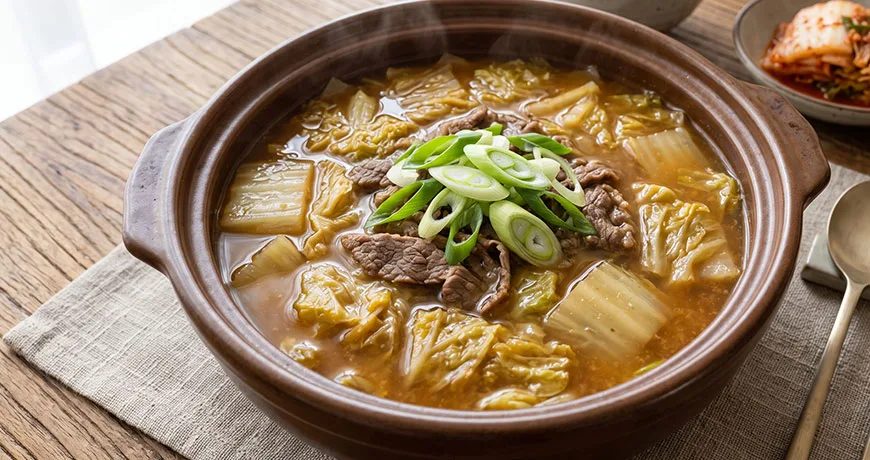
A deeply comforting, mild, and naturally sweet traditional Korean soup (guk) made by simmering the tender, yellow inner leaves of napa cabbage (baechu-sokdae) in a savory fermented soybean paste (doenjang) broth. As the cabbage boils, it releases a delicate sweetness that perfectly balances the earthy depth of the doenjang. Warm, soothing, and easily digestible, it is a staple of everyday Korean home cooking.
⏱️ Total: 20 mins | Prep: 5 mins | Cook: 15 mins | 🍳 Easy | 🥬 High in Dietary Fiber | 🍲 Everyday Comfort Soup
Ingredients (2-3 servings)
- Main Ingredients: 200g tender inner yellow leaves of napa cabbage (baechu-sokdae), 4 cups anchovy-kelp broth (myeolchi-dasima yuksu) or rice-washing water (ssal-tteumul)
- Seasoning & Aromatics: 2.5–3 tbsp Korean soybean paste (doenjang, adjust according to the saltiness of your paste), 1/2 tbsp minced garlic, 1 stalk green onion (chopped), 1/2 Cheongyang green chili pepper (sliced, optional for a slight kick)
- Optional Add-ins: 1/4 yellow onion (sliced), a small handful of dried shrimp (geon-saeu) or 1/2 block of tofu (cubed)
Allergy Information
- Contains: Soy (Doenjang), Wheat (Doenjang – depending on the brand), Fish (Anchovy broth)
Equipment
- Medium Stockpot, Ladle, Fine Mesh Strainer (for dissolving doenjang), Cutting Board, Knife
Cooking Instructions
- Prepping the Cabbage: Wash the inner yellow leaves of the napa cabbage thoroughly. Slice them vertically down the middle, then cut them horizontally into bite-sized pieces (about 4–5 cm wide).
- Preparing the Broth: In a medium pot, bring 4 cups of anchovy-kelp broth to a boil. (Using rice-washing water is a great traditional alternative that adds starchiness to help bind the soup and mellow out the fermented flavor).
- Dissolving the Doenjang: Lower the heat to medium. Place a fine-mesh strainer into the broth and press the doenjang through it using a spoon. This ensures a smooth, silky soup base without chunky soybean bits.
- Simmering the Cabbage: Add the prepared cabbage (and sliced onions if using) to the boiling broth. Cover the pot and simmer over medium heat for 10–12 minutes until the cabbage becomes deeply tender, slightly translucent, and releases its natural sweet juices.
- Adding Aromatics & Finishing: Stir in the minced garlic. Toss in the chopped green onions (and green chilies/tofu if using). Boil for another 2–3 minutes. Taste the broth and add a pinch of salt or soup soy sauce (guk-ganjang) if needed. Serve piping hot.
💡 Cooking & Pairing Tips / Health Benefits
- Rich in Dietary Fiber for Digestion (Health Benefits): The yellow inner leaves of the napa cabbage are exceptionally rich in moisture, Vitamin C, and soft dietary fiber. Simmering them softens the fibers further, making the soup incredibly gentle on the stomach while effectively promoting bowel movements and helping to prevent constipation.
- The Sweetness of Sokdae: Unlike the tough outer green leaves used for wrapping or hearty stews, the inner yellow core (sokdae) has a concentrated, natural sweetness that entirely transforms the savory doenjang broth into something delicate and soothing.
- Nutritional Synergy (Food Pairing): While doenjang is an excellent source of plant-based protein and probiotics, it lacks Vitamin A and C. Cabbage beautifully supplements these missing vitamins, creating a nutritionally balanced dish.
- Perfect Food & Beverage Pairing: This soup is the quintessential companion to any Korean meal. It pairs flawlessly with warm white rice, spicy stir-fried pork (Jeyuk-bokkeum), or pan-fried mackerel (Godeungeo-gui), acting as a mild palate cleanser.
Nutrition Facts (Estimated)
- Total Content : Approx. 250g (1 serving)
- Calories : 55 kcal
– Sodium : 650mg
– Total Carbohydrate : 7.5g
– Sugar : 2.5g
– Total Fat : 1.2g
– Saturated Fat : 0.2g
– Cholesterol : 2.0mg
– Protein : 4.0g
– Calcium : 45.0mg
– Dietary Fiber : 3.5g
(Daily Values are based on a 2,000 calorie diet and standard Korean nutritional reference values)
The Pure Consolation of Earth and Fermentation
Baechu-doenjang-guk (Cabbage Soybean Paste Soup) is the absolute epitome of Korean home cooking, where the most humble ingredients converge to create profound and restorative warmth. As hearty, deeply fermented soybean paste dissolves into boiling water to form a savory foundation, the tender, pale yellow inner leaves of Napa cabbage seamlessly meld into the broth, blooming with a pure, delicate sweetness.
Having withstood the crisp winds of changing seasons, the inner leaves of the cabbage harbor concentrated earthen vitality within their sturdy fibers. Simmering in the rolling heat of an earthenware pot, the cellular structure of the cabbage gently yields, absorbing the earthy, umami-rich essence of the doenjang like a sponge to achieve an immaculate gastronomic union. Free from the artifice of heavy spices, this simple breath of soy, cabbage, water, and fire boasts a remarkably dense nutritional profile.
True gastronomy does not solely reside in lavish delicacies; it is often found in the comforting embrace of an everyday soup bowl. Encountering a steaming bowl of baechu-doenjang-guk is a serene healing ritual—replenishing the primal energy of the earth often forgotten in modern, overly-stimulating diets, and filling the depths of the soul with unpretentious, affectionate warmth.
Editor’s Review
1. A Gentle Sensory Embrace of Sweet Napa Cabbage and Savory Fermented Soybean Broth
The moment the deeply simmered, tender inner leaves of cabbage are swallowed with the warm broth, they practically melt across the tongue, releasing a subtle, vegetative sweetness that soothingly envelops the palate. This pristine sweetness perfectly contrasts with the deep, resounding umami of the fermented soybean paste, orchestrating an incredibly comforting and multi-dimensional flavor profile that keeps the spoon moving without relying on harsh culinary stimulation.
2. Cellulose Softening Dynamics and Amino Acid Extraction in Aqueous Thermodynamics
Baechu-doenjang-guk represents an exquisite study in aqueous thermal mechanics. Sustained boiling tenderizes the rigid, insoluble dietary fibers (cellulose) of the cabbage, allowing natural free sugars to perfectly leach into the broth. As the cellular walls of the cabbage break down, they bind with glutamic acids and free amino acids derived from the fermented soy proteins. This thermodynamic extraction naturally thickens the body of the soup and maximizes pure, elemental umami without the need for artificial flavor enhancers.
3. The Restorative Solace and Grounding Warmth of a Traditional Morning Table
Served steaming hot on a crisp morning, a bowl of baechu-doenjang-guk serves as the most affectionate culinary comfort, gently elevating the body’s core temperature and soothing the digestive system. Swallowing this hearty, unpretentious broth—rich in dietary fiber and the ancient wisdom of fermentation—washes away the complexities of the modern world, granting a timeless sanctuary of peace and wholesome, maternal warmth.