
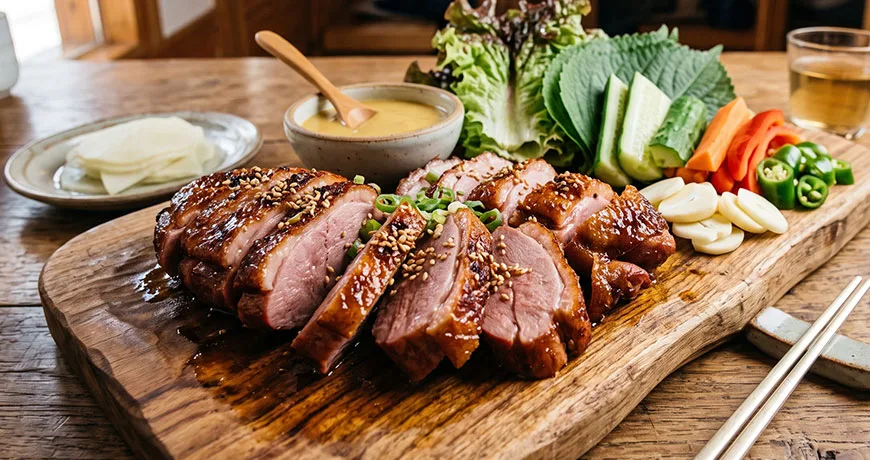
Hunje-ori (Smoked Duck) is a thermodynamic culinary marvel that subjects the thick subcutaneous fat of duck to prolonged, indirect heat. This “Low & Slow” rendering process perfectly melts away excess lipid density while phenolic compounds from the oak wood pyrolysis biochemically adsorb onto the muscle fibers, masking any gamey notes. The rendering leaves the skin ultra-crispy through Maillard reactions, while the interior retains a juicy, tender texture framed by a distinct pink smoke ring. Served alongside raw chives, onions, and mustard—which contains allyl isothiocyanate—the sharp, pungent aromatics chemically reset the palate, perfectly balancing the heavy, rich duck fat.
⏱️ Total: 4.5 hrs (excluding curing) | Prep: 30 mins | Cook: 4 hrs | 🍳 Difficulty: High (Requires precise thermodynamic rendering and smoke control) | 🌶️ Profile: Deeply Smoky, Richly Rendered, and Pungent | 🍚 Focus: Lipid Rendering, Pyrolysis, & Palate Cleansing
Ingredients (2–3 servings)
- Protein & Lipid Matrix: 2 boneless duck breasts (approx. 600g, skin-on)
- Osmotic Curing Base: 1.5 tbsp coarse sea salt, 1 tbsp dark brown sugar, 1 tbsp ground black pepper, 1 tbsp garlic powder, 1 tbsp paprika
- Smoke & Cleansers: 2 handfuls of Oak wood chips (soaked in water for 30 mins), 2 tbsp Dijon mustard, a handful of chives, 1/2 onion (thinly sliced and soaked in cold water to remove harshness)
Allergy Information Contains: Poultry (Duck), Mustard
Equipment BBQ Grill with a lid (or Smoker), Meat Thermometer, Aluminum Foil, Mixing Bowl
Cooking Instructions
- Dry Rub Osmosis: Pat the duck breasts completely dry with paper towels. Score the skin side in a shallow diamond pattern. Evenly massage the dry rub (salt, sugar, spices) into the meat. Refrigerate for at least 4 hours. Osmosis will draw out moisture and pull the seasoning deep into the muscle fibers.
- Pellicle Formation: Let the duck rest at room temperature to air-dry the surface before smoking. The formation of a tacky protein pellicle is chemically essential to attract and hold the volatile smoke aerosols, and a dry skin guarantees a crispy finish.
- Smoking & Lipid Rendering: Set the grill for indirect heat at 110–120°C (225–250°F). Add the wet oak chips to the coals to generate smoke. Place the duck, skin-side up, on the cool side of the grill. Smoke for 2–3 hours. The low, steady thermodynamic energy will slowly liquefy (render) the thick layer of fat underneath the skin.
- Crisping (Maillard Reaction): Once the internal temperature reaches 74°C (165°F), remove the duck. To maximize the skin’s texture, sear the skin side only in a blazing hot cast-iron skillet (or directly over the coals) for 1–2 minutes. This rapidly completely renders any remaining fat and triggers intense Maillard browning.
- Resting & Chemical Balancing: Cover the duck loosely with foil and let it rest for 15 minutes to redistribute the kinetically excited moisture back into the muscle fibers. Slice thinly and serve with the chives, onions, and mustard for a biochemical palate cleanse.
💡 Professional Culinary Tips
- Duck Fat Rendering & Unsaturated Fats: Unlike beef or pork, duck fat contains a high percentage of unsaturated fatty acids, resulting in a significantly lower melting point. A prolonged, low-temperature smoke (110°C) allows this fat to liquefy completely rather than turning rubbery, yielding an exceptionally crispy skin without greasiness.
- Mustard’s Biochemical Cleansing: Pairing duck with mustard is more than a flavor preference. The glucosinolates in mustard seeds react enzymatically to form volatile allyl isothiocyanate. This compound intensely stimulates TRPA1 receptors in the nasal cavity, physically cutting through the lipid coating on your tongue and acting as a perfect palate cleanser.
- The Smoke Ring Mechanism: The distinct pink ring around the edge of the smoked duck meat is not undercooked poultry. It is the chemical result of nitric oxide (NO) and carbon monoxide (CO) from the burning oak reacting with the duck’s myoglobin, locking in the pink color and defending it against thermal denaturation.
Nutrition Facts (Estimated)
Total Content : Approx. 200g (1 serving, reflecting weight loss from rendered fat)
Calories : 480 kcal
– Sodium : 820mg
– Total Carbohydrate : 4.0g
– Sugar : 3.0g
– Total Fat : 35.0g (Primarily unsaturated fatty acids)
– Saturated Fat : 9.0g
– Cholesterol : 110.0mg
– Protein : 34.0g
– Dietary Fiber : 1.5g
*Daily Values are based on a 2,000 calorie diet and standard Korean nutritional reference values.
**Nutritional values are calculated based on original ingredients; substitutions may alter specific macronutrients.
Origins and Food Culture of Smoked Duck
1. Evolution from Medicinal Broths to Modern Wellness Barbecue
- Historically revered in Korean traditional medicine as a cooling, restorative tonic consumed in herbal soups (baeksuk), duck transitioned into a contemporary culinary staple with the introduction of modern smoking methods in the 1990s.
- Suburban dining destinations specializing in oak-fired smoked duck quickly gained fame, transforming duck meat into an approachable, beloved wellness food for all generations.
2. The Culinary Science of Oak Wood Smoking and Gentle Fat-Rendering
- Slowly smoking the duck over aromatic oak logs at controlled temperatures forms the core of its artisanal technique, locking in succulent natural juices while eliminating poultry gaminess.
- This careful rendering leaves the meat lean, tender, and subtly infused with smoky phenols, allowing it to be finished quickly on tabletop grills or pans for an extra layer of savory crispness.
3. Vibrant Table Accents with Mustard, Chives, and Fresh Greens
- Smoked duck is traditionally enjoyed wrapped in thinly sliced pickled radish with a generous dollop of piquant mustard sauce and seasoned garlic chives, creating an invigorating balance of flavors.
- Celebrated for its heart-healthy fats and clean nutritional balance, it remains an enduring centerpiece for wholesome family outings, modern diet routines, and festive home gatherings.
The Fragrant Kiss of Oakwood Firewood and the Succulent Nectar of Rendered Duck: A Lyrical Masterpiece of Hunje Ori and Restorative Gastronomy
Hunje Ori (Oakwood Smoked Duck) stands as the noble, aromatic, and healthfully balanced pinnacle of Korean poultry gastronomy, where tender whole duck—celebrated for centuries as a vitalizing stamina food rich in clear unsaturated fatty acids—is patiently smoked over the embers of natural oak firewood (chamnamu). Elevating poultry craft beyond standard high-heat grilling, this slow-smoking discipline banishes gaminess, melts away heavy rendered fats, and locks in pure, succulent juices, filling the dining space with an intoxicating perfume of rich hardwood smoke the moment it touches the hot plate.
The moment a golden-bronzed, gently crisped slice of smoked duck is dipped into tangy mustard sauce and wrapped within crisp garden greens, pickled radish, or seasoned chives, an immediate wave of sweet oakwood aromatics gently envelops the senses. Because duck fat possesses an exceptionally low melting point, it coats the palate in a light, silky savory essence rather than heavy grease, harmonizing effortlessly with the springy, tender bite of the meat. The zesty sharpness of mustard and the watery crunch of raw botanicals cut through the savory baseline, leaving the palate clean, energized, and deeply nourished.
True gastronomy does not rely on artificial enhancers or heavy seasonings; it flourishes in the ancestral wisdom of utilizing fragrant woodsmoke and gentle thermal currents to purify rich meats, restoring physical vitality and metabolic ease through mindful, slow-cooked nourishment. Savoring a steaming platter of smoked duck today is an elegant and sacred ritual—clearing away modern exhaustion through a wave of clean, savory warmth and filling the spirit with unpretentious nourishment, hearthside heritage, and timeless solace.
Editor’s Review
1. An Exhilarating Cadence of Oakwood Guaiacol Aromatics, Tender Duck Muscle Elasticity, and Piquant Mustard-Botanical Harmony
The moment a slice of sizzling smoked duck touches the palate, an immediate burst of sweet, earthy oakwood smoke awakens the senses with rustic sophistication. This refined baseline is swiftly energized by the concentrated, savory depth of the springy duck meat, whose tender resistance marries effortlessly with the sharp tang of mustard and the crisp crunch of raw lettuce and seasoned chives, orchestrating an endlessly satisfying, multi-layered sensory thrill that nourishes from first bite to last.
2. Duck Unsaturated Fatty Acid Low-Melting-Point Kinetics, Oak Lignin Phenolic Deodorization, and Allyl Isothiocyanate Digestive Synergy
Hunje Ori represents an exacting study in poultry lipid thermodynamics and botanical flavor biochemistry. Composed of approximately 70% unsaturated fatty acids (notably oleic and linoleic acids), duck fat melts at temperatures below human body heat, facilitating light digestion and rapid metabolic absorption. Concurrently, phenolic volatiles (guaiacol, syringol) released during oakwood pyrolysis actively neutralize lipid oxidation off-notes, while allyl isothiocyanate (AITC) from the mustard condiment stimulates bile secretion and gastrointestinal motility, establishing an optimal biochemical equilibrium for cardiovascular wellness.
3. The Suburban Hearthside Garden Heritage and the Grounding Sanctuary of Healthful Convivial Feasts
Rooted in the cherished tradition of weekend family excursions to suburban garden restaurants and outdoor grill hearths, a modest plate of sizzling smoked duck serves as an enduring emotional haven against daily weariness. Revered for generations as an indispensable wellness staple that delivers deep satisfaction without greasy heaviness, enjoying this slow-crafted delicacy washes away modern stress, granting a timeless sanctuary of stillness, rustic heritage, and grounded culinary happiness.