
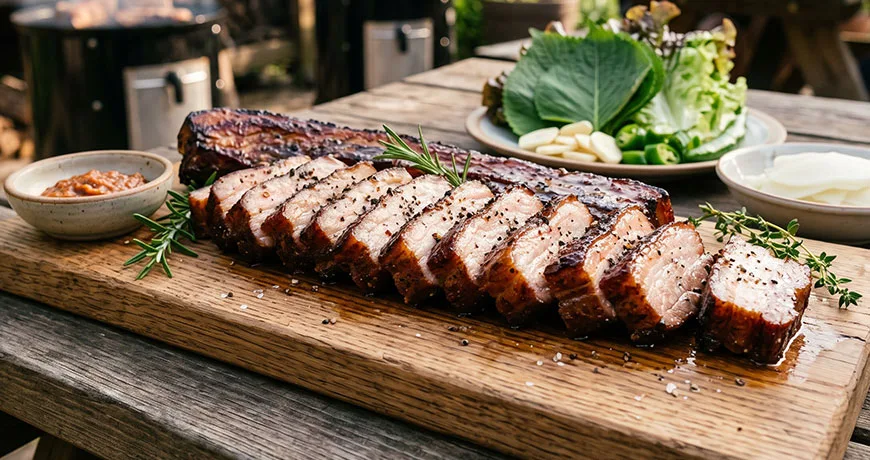
Hunje-samgyeopsal is a product of thermodynamic culinary engineering, where phenolic and carbonyl compounds from wood pyrolysis physically and chemically adsorb onto the pork belly’s surface. This process effectively masks any gamey odors and dramatically extends preservation. Cooked using a ‘Low & Slow’ method at 100–120°C with indirect heat, the high-density subcutaneous lard undergoes thermodynamic lipid rendering, slowly melting away excess fat. Simultaneously, the muscle fibers remain hydrated and tenderized. The exterior develops a dark, crusty “bark” formed by Maillard reactions and smoke aerosol accumulation, resulting in a profoundly smoky, deeply savory umami texture that satisfies multiple sensory receptors.
⏱️ Total: 4.5 hrs (excluding curing) | Prep: 30 mins | Cook: 4 hrs | 🍳 Difficulty: High (Requires precise thermodynamic and aerosol control) | 🌶️ Profile: Deeply Smoky, Savory, and Richly Rendered | 🍚 Focus: Pyrolysis, Lipid Rendering, & Pellicle Formation
Ingredients (4 servings)
- Protein & Lipid Matrix: 1 kg whole Pork Belly (skinless)
- Osmotic Dry Rub Base: 2 tbsp coarse sea salt, 2 tbsp dark brown sugar, 1 tbsp freshly ground black pepper, 1 tbsp garlic powder, 1 tbsp onion powder, 1 tbsp paprika
- Aerosol & Phenolic Source: 2–3 handfuls of Oak or Applewood wood chips/chunks (soaked in water for 30 minutes)
Allergy Information Contains: Pork
Equipment BBQ Grill with a lid (or a dedicated Smoker), Meat Thermometer, Aluminum Foil, Wood Chips, Mixing Bowl
Cooking Instructions
- Dry Rub Osmosis: Thoroughly dry the surface of the whole pork belly with paper towels. Vigorously massage the dry rub (salt, sugar, spices) into all sides of the meat. Refrigerate for at least 4 hours to overnight. Through osmosis, moisture is drawn out, dissolves the salt and spices, and is reabsorbed deeply into the muscle fibers.
- Pellicle Formation: Before smoking, remove the meat from the fridge and let it sit uncovered to air-dry slightly. This forms a tacky protein film called a ‘pellicle,’ which is biochemically essential for capturing and adhering the volatile smoke aerosols to the meat’s surface.
- Pyrolysis & Phenolic Penetration: Set up your grill for indirect heat, maintaining a strict internal ambient temperature of 110–120°C (225–250°F). Place the soaked wood chips over the hot coals to initiate pyrolysis (smoke generation). Place the pork belly away from the direct heat source and close the lid.
- Thermodynamic Lipid Rendering: Smoke for approximately 3 to 4 hours. Wait until the internal core temperature of the meat reaches 75°C (165°F). During this prolonged thermal exposure, the saturated fats slowly render (liquefy and drain), and the tough connective tissues dissolve into soft, highly palatable gelatin.
- Resting (Fluid Redistribution): Remove the smoked pork belly from the grill, wrap it tightly in aluminum foil, and let it rest at room temperature for 20–30 minutes. The thermal kinetic energy settles, allowing the liquefied juices and lipids—which were driven to the center of the meat—to redistribute evenly throughout the muscle matrix, guaranteeing a juicy cut.
💡 Professional Culinary Tips
- The Biochemistry of the Smoke Ring: When you slice the smoked pork belly, you will notice a distinct pink ring just beneath the dark bark. This is not undercooked meat. It is the scientific result of nitrogen dioxide (NO2) gas from the burning wood reacting with the meat’s myoglobin. This chemical bond fixes the pink color, defending it against thermal denaturation.
- The Mechanism of Bark Formation: The dark, crusty exterior (bark) is not burnt meat. It is a highly complex biochemical layer formed when water-soluble proteins (drawn out by osmosis) undergo the Maillard reaction and polymerize with the spices from the rub and the phenolic compounds from the smoke aerosol over a sustained period of heat.
- The Thermodynamic Stall: During smoking, the meat’s internal temperature may plateau around 70°C (160°F) for hours. This “stall” occurs because the evaporative cooling of moisture leaving the meat’s surface perfectly balances the thermal energy of the grill. Do not raise the heat; maintaining the steady temperature is crucial for rendering the fat and building a perfect bark.
Nutrition Facts (Estimated)
Total Content : Approx. 200g (1 serving, reflecting significant weight loss from rendered fat and moisture)
Calories : 520 kcal
– Sodium : 780mg
– Total Carbohydrate : 6.0g
– Sugar : 4.0g
– Total Fat : 38.0g (Significantly reduced from raw state due to rendering)
– Saturated Fat : 14.0g
– Cholesterol : 85.0mg
– Protein : 32.0g
– Dietary Fiber : 1.0g
*Daily Values are based on a 2,000 calorie diet and standard Korean nutritional reference values.
**Nutritional values are calculated based on original ingredients; substitutions may alter specific macronutrients.
Origins and Food Culture of Smoked Samgyeopsal
1. The Harmonious Marriage of Western Charcuterie and Korean Barbecue
- Born from the ingenious fusion of Western slow-smoking preservation techniques and Korea’s unrivaled passion for pork belly (samgyeopsal), this dish represents a modern evolution of contemporary table culture.
- By taming the natural richness of pork belly through aromatic wood smoke, it has established itself as an approachable, wellness-oriented gourmet standard.
2. The Culinary Science of Wood Smoke and Fat-Rendering Mastery
- Slowly cooking the meat over low indirect heat using natural hardwood chips—such as oak, cherry, or applewood—forms the core of its artisanal preparation.
- The aromatic smoke seals in natural juices while melting away excess rendering fats, imparting an appetizing amber hue and transforming the texture into tender, succulent perfection.
3. The Centerpiece of Outdoor Camping and Modern Gatherings
- With the flourishing outdoor camping and leisure culture in Korea, smoked pork belly has become an indispensable centerpiece for open-air feasts and social gatherings.
- Seamlessly bridging global and local flavors, it pairs brilliantly with everything from yellow mustard and pickled perilla leaves (myeonginamul) to white kimchi, maintaining enduring popularity for festive dinners and casual entertaining.
The Aromatic Kiss of Hardwood Smoke and the Rendered Elegance of Tender Pork Belly: A Lyrical Masterpiece of Hunje Samgyeopsal and Hearthside Campfire Solace
Hunje Samgyeopsal (Smoked Pork Belly) stands as the refined, deeply aromatic, and healthfully balanced pinnacle of pork gastronomy, where lush, marbled slabs of fresh pork belly are patiently exposed to the fragrant smoke of natural hardwoods such as oak or applewood. Transcending simple direct-heat grilling, this gentle smoking craft banishes all gaminess and renders out excess saturated fat, yielding a remarkably lean, succulent, and springy texture that fills the dining space with an intoxicating perfume of rich woodsmoke from the very first slice.
The moment a golden-amber slice of smoked pork belly touches the palate, an immediate wave of velvety hardwood aromatics gently envelops the senses, swiftly followed by a clean, luscious burst of concentrated savory juices. With the heavy rendered fats melted away, the tender meat delivers a delightful, springy resistance that yields effortlessly without any greasy heaviness. Paired with tangy whole-grain mustard, crisp ssam greens, or pickled accompaniments, every bite achieves a harmonious balance that revitalizes tired spirits and brings profound gastrointestinal ease.
True gastronomy does not rely on heavy sauces or artificial enhancers; it flourishes in the artisanal wisdom of utilizing natural woodsmoke and gentle thermal currents to purify rich meats, restoring physical equilibrium through mindful slow-cooked nourishment. Savoring a steaming platter of smoked pork belly today is an elegant and sacred ritual—clearing away modern exhaustion through a wave of savory warmth and filling the spirit with unpretentious comfort, campfire heritage, and timeless solace.
Editor’s Review
1. An Exhilarating Cadence of Woodsmoke Guaiacol Aromatics, Tender Rendered Pork Belly Chew, and Piquant Accoutrement Harmony
The moment a bite of crisp-edged smoked pork belly coats the palate, an immediate burst of sweet, earthy hardwood smoke awakens the senses with rustic sophistication. This refined baseline is swiftly energized by the concentrated, savory depth of the rendered meat, whose springy tenderness marries effortlessly with the sharp acidity of mustard and the watery crunch of fresh lettuce wraps, orchestrating an endlessly satisfying, multi-layered sensory thrill that nourishes from first bite to last.
2. Wood Pyrolysis Phenolic Deodorization Kinetics, Indirect Lipid Rendering Thermodynamics, and Nitric Oxide Smoke Ring Chromatics
Hunje Samgyeopsal represents an exacting study in aerosol chemistry and lipid phase thermodynamics. Thermal pyrolysis of hardwood releases volatile phenols, notably guaiacol and syringol, which actively bind to and neutralize lipid oxidation volatiles and off-flavor amines. Concurrently, controlled low-to-medium heat promotes continuous lipid rendering, reducing excess saturated fats while tenderizing myofibrillar connective tissues. Furthermore, nitric oxide (NO) and carbon monoxide (CO) from the smoke combine with muscle myoglobin to develop a distinctive, rose-tinted peripheral “smoke ring,” stabilizing proteins and locking in micronutrients for optimal bioavailability.
3. The Rustic Campfire Hearthside Heritage and the Grounding Sanctuary of Convivial Outdoor Feasts
Rooted in the timeless romance of woodland campsites and weekend open-air barbecues where families gather around smoking pits to share honest nourishment, a modest plate of smoked pork belly serves as an enduring emotional haven against daily weariness. Revered as an indispensable wellness staple that delivers deep satisfaction without greasy heaviness, enjoying this slow-crafted delicacy washes away modern stress, granting a timeless sanctuary of stillness, outdoor heritage, and grounded culinary happiness.