
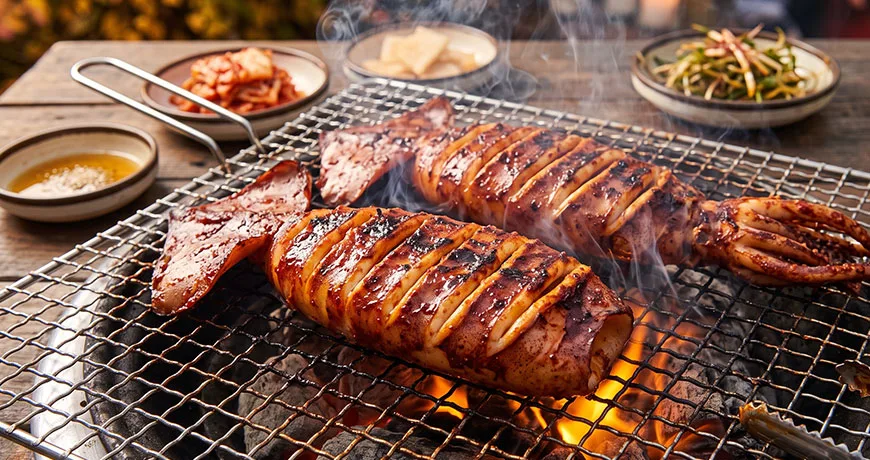
Ojingeo-gui is a rheological seafood dish that requires precise mechanical manipulation of the squid’s densely layered collagen fibers. By peeling away the tough outer chromatophore membrane and meticulously scoring the inner mantle in a crosshatch pattern, you effectively neutralize the violent thermal contraction that causes squid to curl rubberily over high heat. The scoring also exponentially increases the surface area for the hypertonic gochujang emulsion to adhere. Flash-grilled over intense radiant heat, the surface moisture instantly evaporates, triggering rapid caramelization of the sugars. When timed perfectly, the collagen matrix retains an exquisite, crunchy-yet-tender viscoelasticity while perfectly preserving the squid’s natural, umami-rich taurine compounds.
⏱️ Total: 25 mins | Prep: 20 mins | Cook: 5 mins | 🍳 Difficulty: Moderate (Requires collagen cleavage and strict thermal coagulation timing) | 🌶️ Profile: Sweet, Fiery, Smoky, and Snappy | 🍚 Focus: Mechanical Cleavage, Flash Evaporation, & Collagen Thermodynamics
Ingredients (2 servings)
- Protein Matrix: 2 fresh Squid (mantle/body tubes only, cleaned with innards and eyes removed)
- Hypertonic Emulsion Marinade: 3 tbsp Gochujang (Korean chili paste), 1 tbsp Gochugaru (chili flakes), 1 tbsp soy sauce, 2 tbsp corn syrup (or oligosaccharide), 1 tbsp sugar, 1 tbsp minced garlic, 1 tbsp sesame oil, 0.5 tsp ginger juice
- Essential Equipment: Double-sided Gridiron (Grill Basket) or non-stick grill grate
Allergy Information Contains: Squid, Soy, Wheat (from Gochujang and soy sauce)
Equipment Cutting Board, Knife, Mixing Bowl, Charcoal Grill or Gas Stove Grate, Silicone Pastry Brush, Paper Towels
Cooking Instructions
- Membrane Removal: Dip your fingers in coarse salt and rub the end of the squid mantle to grip and physically peel off the purplish skin (chromatophore layer). Removing this tough membrane is mechanically essential to prevent the meat from curling aggressively and becoming chewy during thermal exposure.
- Mechanical Cleavage (Pinecone Cut): Lay the mantle flat and identify the inside (the side where the innards used to be). Make shallow, diagonal crosshatch scores (X pattern) across the entire inner surface. This severs the intersecting radial and circular collagen fibers, allowing the squid to bloom into a beautiful “pinecone” texture rather than curling into a tight tube.
- Primary Evaporation: Pat the squid completely dry. Before applying the marinade, flash-grill the bare squid on a hot grate for 30 seconds. This primary evaporation eliminates excess surface moisture, preventing the hypertonic marinade from drawing out water and washing off later.
- Emulsion Coating & Maillard Browning: Brush the hypertonic gochujang marinade generously onto the flash-dried squid. Grill over intense radiant heat for just 1–2 minutes, flipping frequently to allow the sugars to caramelize without carbonizing (burning).
- Thermal Coagulation Control: Squid collagen denatures and toughens exponentially if heated past 60°C for too long. The moment the scored cuts bloom open and the protein transitions from translucent to opaque white, remove it from the heat immediately to preserve its snappy, tender texture.
💡 Professional Culinary Tips
- Thermodynamics of the Collagen Matrix: A squid’s mantle is essentially a dense matrix of collagen. When exposed to flash, high heat, this structure remains tender and snappy. However, if cooked for more than 3 minutes, the protein fibers violently contract, squeezing out internal moisture and turning the texture into tough rubber. Intense, rapid heat control is non-negotiable.
- The Physics of the Inner Score: Squid muscle fibers thermodynamically contract toward the outer skin layer when heated. If you score the outside, it will just curl shut. By scoring the inside of the mantle, the natural outward contraction forces the crosshatched cuts to push outward and bloom, creating the signature pinecone shape.
- Taurine and Water-Soluble Umami: Squid is extraordinarily rich in taurine, an amino sulfonic acid that provides intense umami and acts as a natural fatigue-reliever. Taurine is highly water-soluble. Do not soak the squid in water or boil it prior to grilling; doing so will wash away all the biochemical flavor compounds. Rinse quickly and dry immediately.
Nutrition Facts (Estimated)
Total Content : Approx. 200g (1 serving, reflecting moisture evaporation)
Calories : 240 kcal
– Sodium : 680mg
– Total Carbohydrate : 16.0g
– Sugar : 12.0g
– Total Fat : 4.0g
– Saturated Fat : 0.8g
– Cholesterol : 350.0mg (High-density, metabolized efficiently with taurine)
– Protein : 32.0g
– Dietary Fiber : 0.5g
*Daily Values are based on a 2,000 calorie diet and standard Korean nutritional reference values.
**Nutritional values are calculated based on original ingredients; substitutions may alter specific macronutrients.
Origins and Food Culture of Seasoned Grilled Squid (Ojingeo Gui)
1. Coastal Heritage of the East Sea and Autumn Squid Harvests
- Originating in the historic fishing ports along Korea’s East Coast—such as Sokcho, Gangneung, and Ulleungdo—where fishermen seared freshly caught autumn squid over open charcoal braziers along the docks.
- Expanding beyond Korea’s traditional sun-dried squid (geon-ojingeo) heritage, grilling fresh squid with piquant chili paste evolved into an approachable, beloved culinary standard across modern Korean dining.
2. The Culinary Science of Diamond Scoring and Rapid Mesh Grilling
- The hallmark of authentic preparation lies in peeling the tough skin and meticulously carving diagonal diamond patterns across the squid mantle, which ensures rapid sauce penetration and prevents the meat from curling unevenly under intense heat.
- Clamping the seasoned squid inside double-sided wire grates and turning it swiftly over intense radiant heat locks in natural oceanic juices while caramelizing the surface, achieving the signature tender, succulent chew (jjolgit-jjolgit) without becoming tough.
3. Street-Side Nostalgia, Tabletop Camaraderie, and the Ultimate Anju
- The irresistible aroma of spicy squid sizzling over open embers is a timeless sensory hallmark of Korean street stalls (pojangmacha) and neighborhood taverns.
- Celebrated both as a consummate “rice thief” (bap-doduk) that enlivens a simple bowl of steamed rice and as an indispensable anju (drinking companion) paired with chilled beer or soju, Seasoned Grilled Squid remains an enduring seafood comfort food across generations.
The Sizzling Crackle of Glowing Embers and the Caramelized Embrace of Gochujang Glaze: A Refined Portrait of Grilled Squid
Grilled Squid (Ojingeo-gui) stands as an intensely flavorful, texture-driven centerpiece of Korean seafood gastronomy, featuring fresh autumn squid—prized for peak seasonal sweetness and robust muscle density—thoroughly stripped of its outer membrane and scored with a precise diamond-hatch pattern of diagonal cuts. Bathed in a vibrant crimson glaze of sun-dried chili paste, soy sauce, garlic, malt syrup, and sesame oil, the scored body is clamped in wire grates and seared directly over incandescent charcoal. Unlike skillet-braised variations that simmer in their own released juices, gridiron grilling utilizes intense radiant far-infrared heat to rapidly evaporate surface moisture while caramelizing the spiced chili lacquer into a rich, smoky crust.
Lifting a freshly charred, amber-tinted morsel from the gridiron reveals an immediate, appetizing aroma of sweet woodsmoke and savory seafood. Sinking your teeth into the piece delivers an instant textural delight: the meticulous diagonal scoring allows the dense muscle fibers to yield with a tender, springy resilience rather than rubbery resistance. Each chew releases a concentrated burst of umami-rich inosinates intrinsic to fresh squid, harmonized seamlessly with the piquant, sweet-and-savory gochujang glaze. Satisfyingly succulent and irresistibly chewy, it offers a deeply engaging sensory experience that pairs effortlessly with a chilled glass of beer or a bowl of steaming rice.
The true brilliance of Grilled Squid lies in its thoughtful marriage of structural knife work and live-fire physics. By breaking down the tough transverse muscle bands through delicate cross-hatching, the cook enhances both marinade penetration and tenderness, transforming a notoriously challenging cephalopod cut into an approachable delicacy. Enjoyed around a warm hearth during the brisk autumn season, sharing a smoky platter of gridiron squid remains a cherished dining ritual that washes away daily weariness and celebrates the honest, restorative bounty of the sea.
Editor’s Review
1. A Harmonious Interplay of Diagonal Scoring, Caramelized Gochujang Char, and Bouncy Cephalopod Snap
The visual and aromatic appeal of dark, caramelized grill markings crisscrossing the tender squid body sets an enticing sensory standard. The deep diamond incisions allow radiant heat to cook the thick muscle evenly while absorbing the spicy-sweet glaze, preventing toughness and delivering a velvety, springy mouthfeel. The rich umami of the seafood fuses effortlessly with the smoky chili crust, leaving a clean, deeply satisfying finish on the palate.
2. Cross-Hatch Myofibrillar Tenderization and Rapid Radiative Inosinate Concentration
Grilled Squid represents an exacting study in cephalopod muscle biomechanics and direct-heat thermodynamics. Because squid muscle fibers contract aggressively under heat, making them prone to rubbery toughness, the precise diagonal scoring physically disrupts the tissue matrix, ensuring a tender bite. Simultaneously, open-grid charcoal searing rapidly drives off excess surface water, concentrating natural nucleotide-rich umami compounds (like inosinates and glutamates) for intensified savoriness.
3. The Crisp Seasonal Bounty of Autumn Catches and the Grounding Sanctuary of Convivial Tavern Feasts
Rooted in coastal fishing traditions where peak-season autumn squid is celebrated for maximum sweetness and substance, gridiron-grilled squid serves as an enduring emotional touchstone in Korean culinary culture. Whether enjoyed as a comforting evening side dish or as a celebratory tavern snack shared among friends, this honest seafood delicacy honors a time-tested appreciation for seasonal eating, masterful knife craftsmanship, and unpretentious communal warmth.