
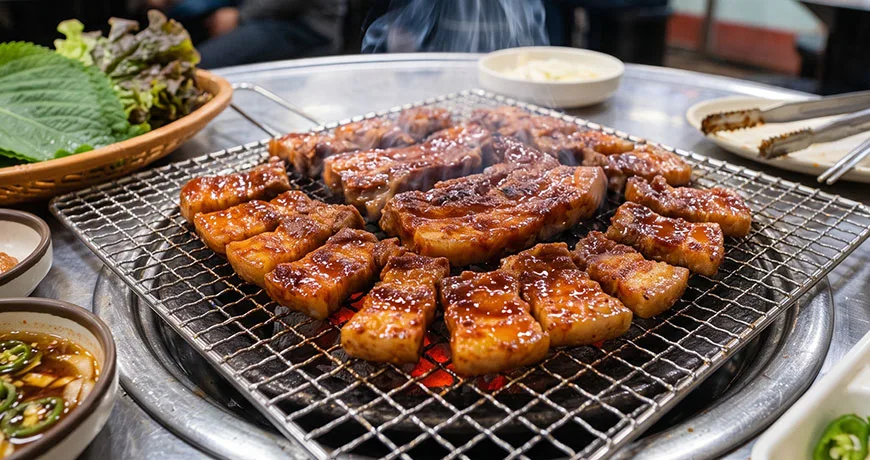
Gochujang-samgyeopsal is a biochemical grilling masterpiece where the high-density lipids of pork belly fuse with a hypertonic, fermented chili paste emulsion. When exposed to high thermal energy, the pork belly undergoes aggressive Maillard reactions and sugar caramelization. The rich Vitamin B1 (Thiamine) in the pork chemically bonds with the allicin from the minced garlic to form ‘Allithiamine,’ a fat-soluble compound that exponentially increases intestinal absorption and rapidly combats chronic fatigue. The rendered lard coats the capsaicin, delivering a highly aromatic, fiery, and deeply savory umami profile, which is then biochemically balanced by the fibrous, toxin-clearing properties of fresh lettuce and perilla leaves.
⏱️ Total: 45 mins (includes marination) | Prep: 10 mins | Cook: 5 mins | 🍳 Difficulty: Moderate (Requires strict caramelization threshold control) | 🌶️ Profile: Sweet, Fiery, Smoky, and Richly Fatty | 🍚 Focus: Osmotic Marination, Allithiamine Synthesis, & Lipid Melting
Ingredients (2 servings)
- Protein & Lipid Matrix: 500g Pork Belly (Samgyeopsal, cut to 0.5–0.7cm thickness)
- Hypertonic Fermented Emulsion: 3 tbsp Gochujang (fermented chili paste), 1 tbsp Gochugaru (chili flakes), 1.5 tbsp soy sauce, 1.5 tbsp minced garlic, 1 tsp ginger juice (for gingerol), 2 tbsp corn syrup, 1 tbsp sugar, 1 tbsp sesame oil, a pinch of black pepper
- Palate Cleansers: Fresh lettuce leaves, perilla leaves, and shredded scallions (for fiber and sodium excretion)
Allergy Information Contains: Pork, Soy, Wheat (from Gochujang and soy sauce)
Equipment Mixing Bowl, Heavy-bottomed Skillet or Grill Grate, Tongs, Scissors
Cooking Instructions
- Emulsion Prep: In a bowl, vigorously mix all the marinade ingredients except the sesame oil. Allow the sugars and amino acids to hydrate briefly, then fold in the sesame oil to create a protective lipid emulsion.
- Osmotic Marination: Coat the pork belly slices evenly with the hypertonic marinade. Refrigerate for 30 minutes. Osmosis forces the capsaicin and active enzymes deep into the muscle fibers, tenderizing the meat.
- Lipid Melting & Thermal Coagulation: Place the marinated meat on a highly heated grill or skillet (over 150°C/300°F). The thermal energy melts the subcutaneous lard, causing it to render out and essentially fry the meat in its own flavorful fat.
- Caramelization Control: The sugars and syrups in the marinade will burn much faster than the meat proteins. To prevent carbonization, flip the meat frequently just as it hits the caramelization threshold. This continuous flipping safely coats the meat in a smoky, aerosolized char.
- Biochemical Plating: Serve the grilled meat wrapped in lettuce and perilla leaves. The perillaketone aromatics in the perilla leaf mask any residual pork odor, while the dense dietary fibers physically bind to excess saturated fats and sodium, aiding in digestive clearance.
💡 Professional Culinary Tips
- Allithiamine Synthesis: Pork is rich in water-soluble Vitamin B1 (Thiamine), which naturally has a low absorption rate. However, when combined with allicin from the minced garlic in the marinade, it converts into lipid-soluble ‘Allithiamine.’ This biochemical conversion increases intestinal absorption by 10 to 20 times, providing an immediate energy boost against chronic fatigue.
- Osmosis and Protein Binding: The high salinity of the fermented pastes and soy sauce triggers osmosis, drawing water out of the meat while forcing the flavor molecules deep into the muscle structure. This tenderizes the flesh and seasons it thoroughly.
- Thermodynamic Moisture Control: When pan-frying, never cover the skillet with a lid. Trapped steam will wash the hypertonic marinade off the meat, resulting in a boiled texture. Leave the pan open to rapidly evaporate the moisture, forcing the meat to fry in its own rendered lipids for a perfect Maillard crust.
Nutrition Facts (Estimated)
Total Content : Approx. 250g (1 serving, cooked weight)
Calories : 650 kcal
– Sodium : 850mg
– Total Carbohydrate : 15.0g
– Sugar : 10.0g
– Total Fat : 55.0g
– Saturated Fat : 20.0g
– Cholesterol : 80.0mg
– Protein : 22.0g
– Dietary Fiber : 1.5g
*Daily Values are based on a 2,000 calorie diet and standard Korean nutritional reference values.
**Nutritional values are calculated based on original ingredients; substitutions may alter specific macronutrients.
Origins and Food Culture of Gochujang Samgyeopsal
1. The Ideal Fusion of Popular Pork Belly and Traditional Fermented Paste
- Following the surge in popularity of grilled samgyeopsal as Korea’s signature dining-out and gathering food during the 1970s and 1980s, incorporating gochujang emerged as a flavorful way to tame the meat’s natural greasiness.
- This preparation quickly evolved into celebrated regional specialties, particularly gaining fame through the charcoal brazier grilled pork (hwarogui) of Hongcheon in Gangwon Province and various local barbecue destinations nationwide.
2. The Culinary Art of Charcoal Grilling and Smoky Aroma
- Because the sugars in the gochujang marinade caramelize and scorch easily, grilling over gentle charcoal heat or a wire mesh with frequent, attentive flipping is essential.
- This technique infuses the pork with a distinct smoky aroma (bulhyang) while concentrating the marinade into a savory, slightly crispy, and sweet-spicy crust that locks in the meat’s juices.
3. A Beloved Soul Food for Gatherings and After-Work Drinks
- Gathering around a sizzling tabletop grill, wrapping a hot piece of seasoned pork in fragrant perilla leaves with a slice of garlic and ssamjang, captures the warm and communal essence of Korean dining.
- Beloved both as a hearty main dish with steamed rice and as the ultimate pairing with a glass of soju to wash away the day’s fatigue, Gochujang Samgyeopsal remains an enduring classic across generations.
The Smoky Hearthfire of Crimson Gochujang and Rich Pork Belly Fat: A Lyrical Masterpiece of Gochujang Samgyeopsal and Sizzling Festivity
Gochujang Samgyeopsal (Spicy Gochujang-Marinated Pork Belly) stands as the robust, convivial, and deeply satisfying pinnacle of Korean grill gastronomy, where thick ribbons of succulent pork belly—celebrated for their rich marbling and tender resilience—are generously coated in a fiery-sweet marinade of aged gochujang, chili flakes, soy sauce, minced garlic, and toasted sesame oil before being seared and charred to perfection over hot coals. Capturing the smoky essence of open-fire cooking and the deep, fermented umami of traditional Korean paste, this iconic grilled specialty fills the dining space with an intoxicating aroma of caramelized sugars and melting fat the moment it hits the sizzling rack.
The moment a charred, ruby-glossed morsel of spicy pork belly is wrapped inside a crisp perilla leaf or lettuce leaf alongside a dab of ssamjang and grilled garlic, an immediate wave of piquant chili heat and rich, savory fat cascades across the senses. The melting richness of the pork lipids balances the sharp kick of the fermented paste marinade, while the refreshing crunch of fresh ssam greens provides an immaculate textural counterbalance. Shared across lively tables accompanied by warm rice and chilled beverages, every bite delivers an unforgettable surge of rustic culinary comfort and unbridled joy.
True gastronomy does not rely exclusively on delicate artifice; it flourishes in the ancestral wisdom of marrying everyday meats with crock-fermented spice and direct open flame to revive tired spirits and warm the core. Savoring a sizzling platter of spicy grilled pork belly today is an elegant and sacred ritual—clearing away modern exhaustion through a wave of fiery, comforting warmth and filling the spirit with unpretentious nourishment, culinary heritage, and timeless solace.
Editor’s Review
1. An Exhilarating Cadence of Spicy-Sweet Gochujang Glaze, Rich Pork Fat Juiciness, and Smoky Char Aromatics
The moment a piping-hot, fire-kissed piece of Gochujang Samgyeopsal touches the palate, an immediate burst of piquant gochujang heat, caramelized sweetness, and smoky char awakens the senses with commanding punch. This bold baseline is swiftly elevated by the melting, savory richness of the pork belly fat, orchestrating an endlessly satisfying, multi-layered sensory thrill that makes it the ultimate companion to warm rice and crisp wrap vegetables.
2. Pork Thiamine (Vitamin B1)-Garlic Allicin Allithiamine Bio-Availability Kinetics and Maillard Browning Thermodynamics
Gochujang Samgyeopsal represents an exacting study in nutritional biochemistry and grill-surface thermal kinetics. High concentrations of Vitamin B1 (thiamine) naturally present in pork interact synergistically with organosulfur allicin from the garlic marinade to form allithiamine, multiplying cellular absorption rates and accelerating metabolic fatigue clearance. Concurrently, high-heat grilling triggers the Maillard reaction between pork amino acids and marinade sugars, generating complex savory compounds while capsaicin stimulates thermogenic circulation.
3. The Communal Grill Alley Heritage and the Grounding Sanctuary of Convivial Tabletop Feasts
Found commanding center stage at bustling Korean barbecue alleys and outdoor weekend gatherings as the undisputed emblem of shared camaraderie, a modest plate of spicy grilled pork belly serves as an enduring emotional haven against daily weariness. Revered for generations as an essential comfort feast that unites diners through the tactile joy of wrapping and sharing grilled meats, enjoying this honest, nutrient-dense delicacy washes away modern stress, granting a timeless sanctuary of stillness, culinary heritage, and grounded happiness.